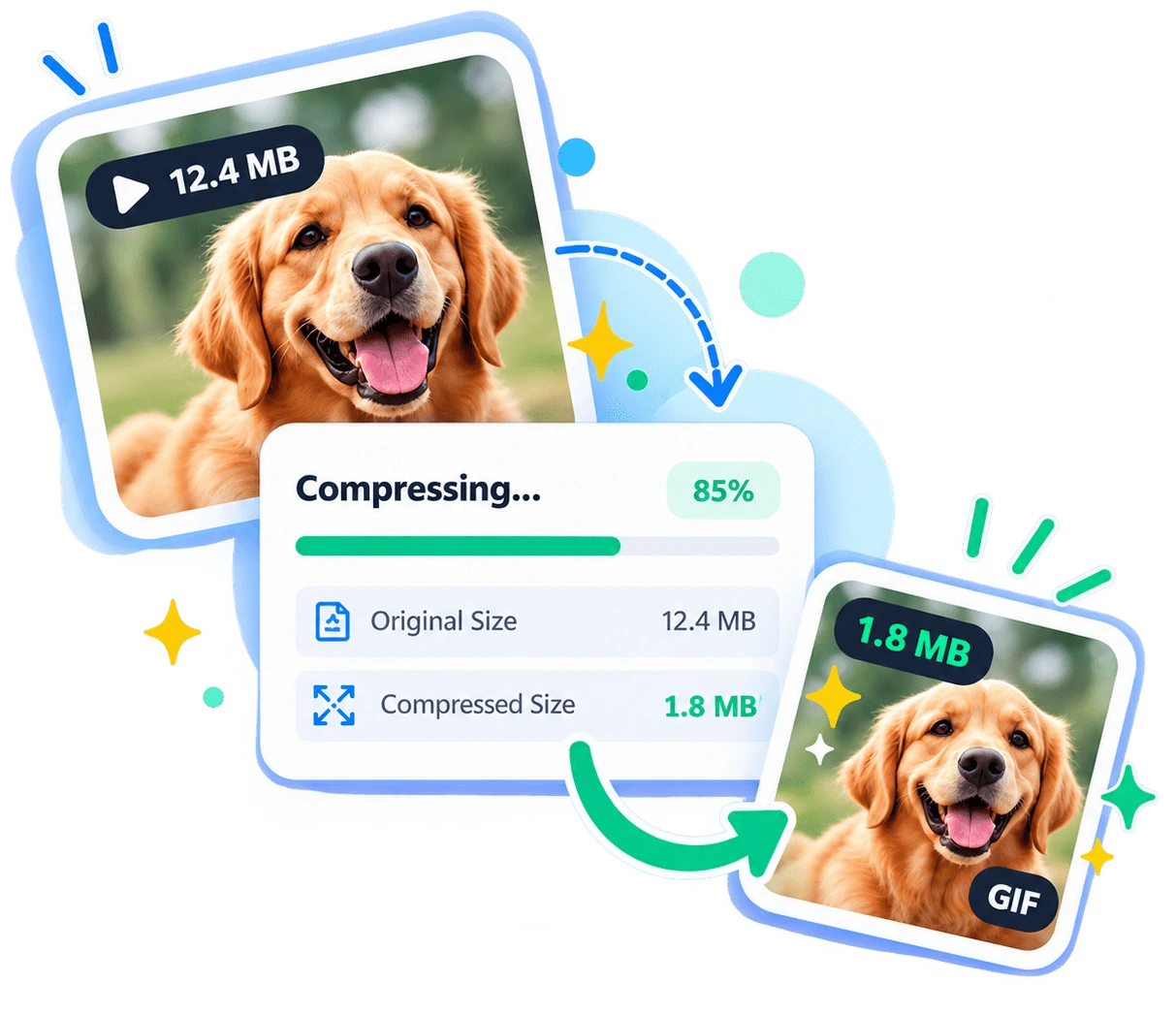
Simple Guide to Reducing GIF File Size
Learn how color limits, frame trims, and smart encoding reduce GIF size while keeping motion smooth.
How GIF File Optimization Works
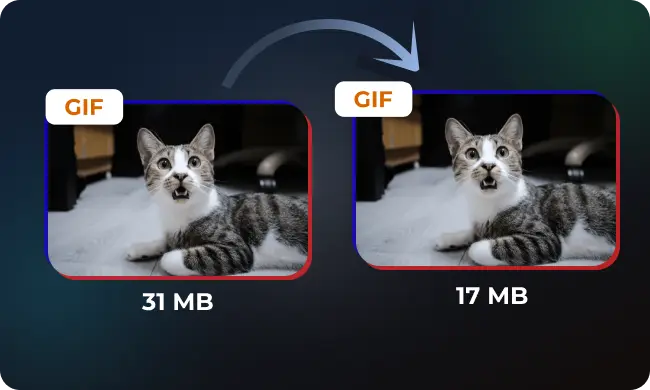
Animated GIFs contain a series of frames. Each frame holds a color map with up to 256 colors, based on the W3C GIF89a standard . When every frame stores full image data, the file grows very heavy.
Modern tools fix this by saving only the pixels that change from one frame to the next. By reducing the number of colors and removing duplicate frames, you save huge amounts of data. Unchanged areas become transparent. With smart frame analysis and frames removing redundant still shots, motion stays smooth and file sizes drop fast. To learn more about image types and web speed, check out the MDN Web Docs Image Guide .
Choose the Right Preset for Your Needs
Different jobs need different settings. Here is a simple comparison:
| Preset Mode | How It Works | Size Saved | Visual Quality | Best Used For |
|---|---|---|---|---|
| Lossless Mode | Cleans data and removes hidden text | 20% – 40% | 100% Same | Logos, clean graphics, and art files |
| Balanced / Visual | Smart light lossy compression | 40% – 65% | Looks Great | Websites, blog posts, and emails |
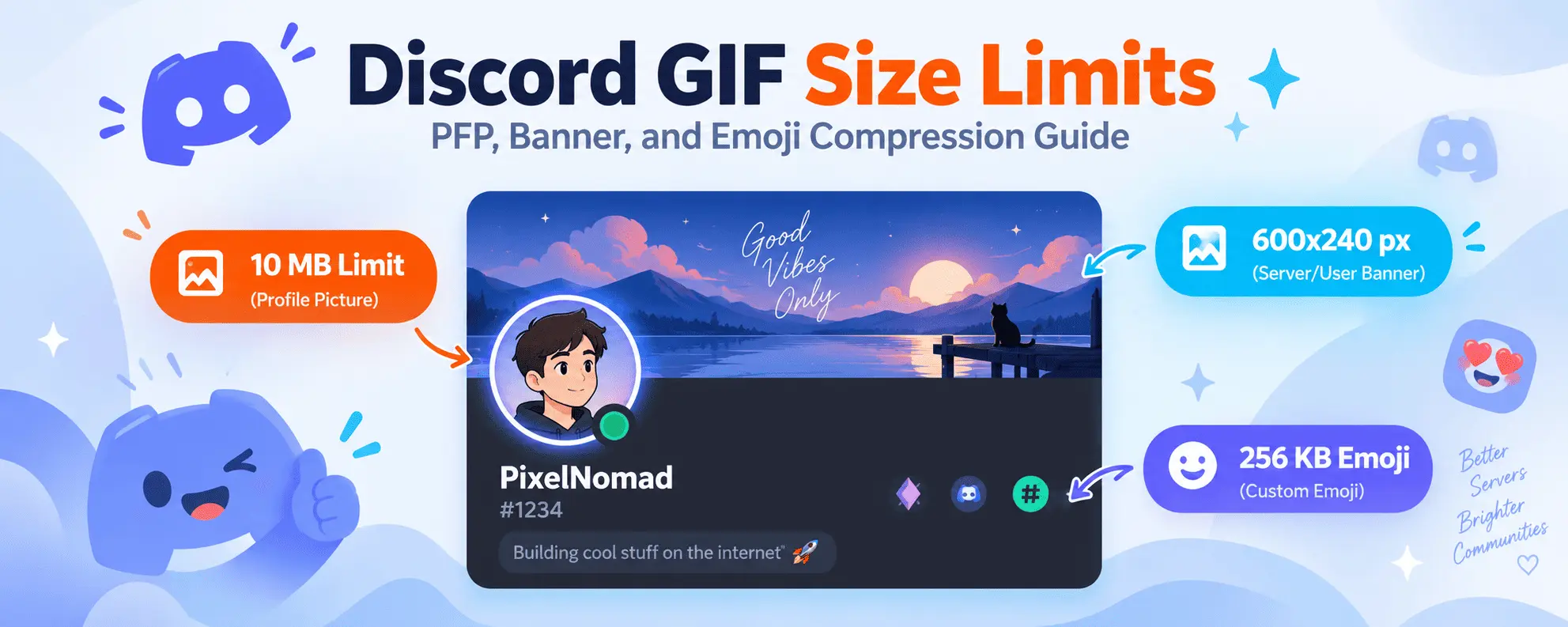
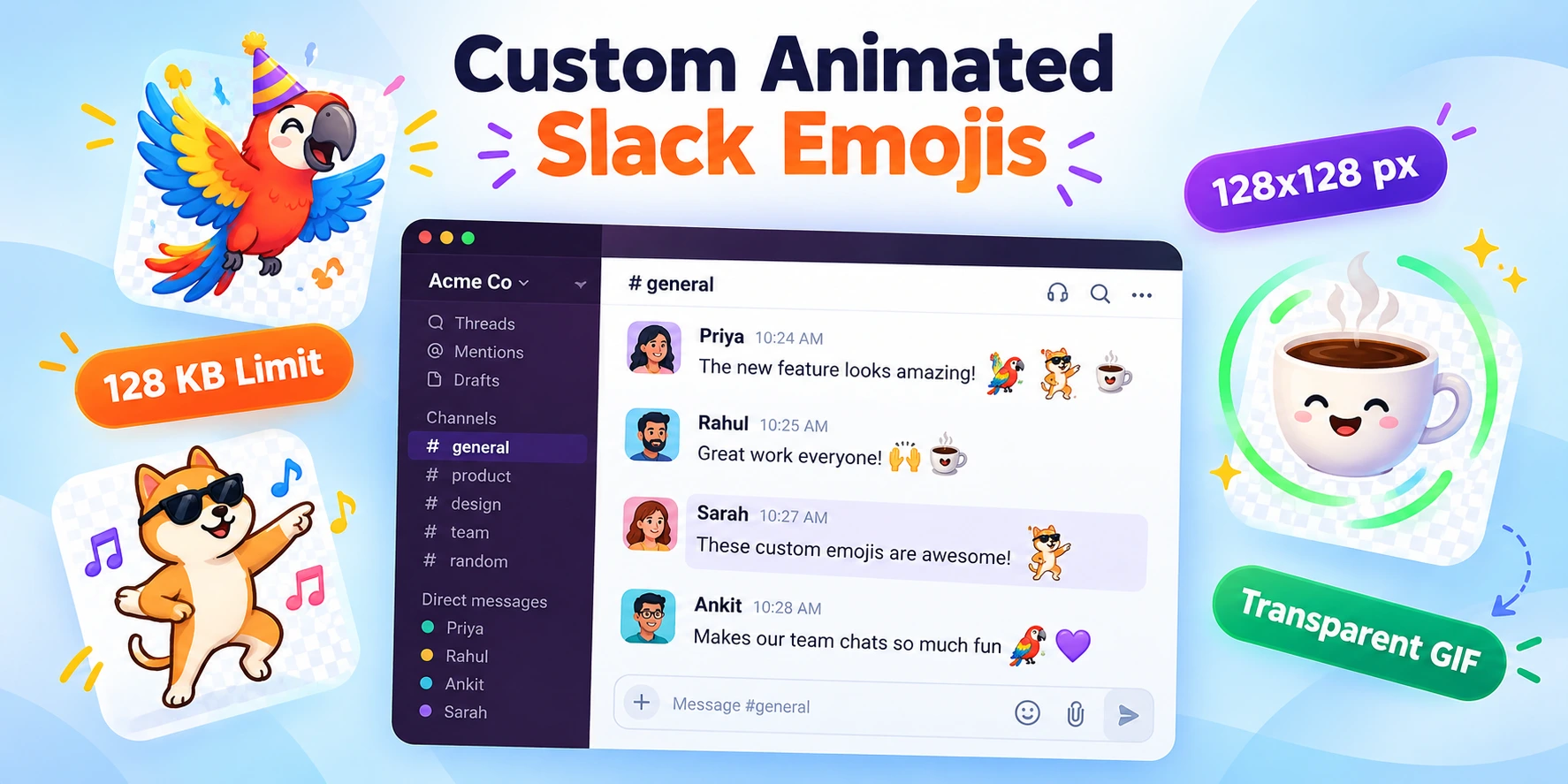
| Aggressive Mode | Strong compression with dithering | 60% – 85% | Good Quality | Discord limits, Slack, and chat apps |
| Custom Mode | Pick your own colors, scale, and lossy level | Up to 90% | Custom | Strict file caps and custom projects |
Tips to Get the Smallest GIF File Size
- • Limit the Number of Colors: Reducing the number of colors from 256 to 128 or 64 cuts file size by over 30% and still looks sharp.
- • Resize Dimensions: Shrinking a large GIF from 1080p to 480px cuts file size by more than half.
- • Remove Duplicate Frames: Shorten your animation. By trimming still parts and frames removing extra delays, the file becomes much lighter.
- • Keep Backgrounds Still: Animations shrink better when the camera stays still and few pixels move.
Explore More Free GIF Tools
Edit, convert, and optimize GIFs online with our other free tools: