The Complete Guide to Extracting and Analyzing GIF Frames
Master the technical nuances of GIF disposal methods, temporal delta frames, alpha transparency, and image sequence reconstruction.
Understanding GIF Frame Architecture & Disposal Methods
Unlike video codecs that store complete keyframes at regular intervals (I-frames), an animated GIF file contains a sequential chain of 8-bit indexed raster images. According to the official W3C GIF89a Specification , each frame includes a Graphic Control Extension block that dictates its display duration (in 1/100th-second units) and a critical parameter known as the Disposal Method.
The disposal method dictates how a decoder handles the graphic canvas before rendering the subsequent frame:
- Disposal 0 / 1 (Do Not Dispose): Leaves the existing frame in place and draws only updated pixels on top (ideal for delta compression).
- Disposal 2 (Restore to Background): Clears the frame's bounding rectangle to transparent background before rendering next frames.
- Disposal 3 (Restore to Previous): Restores the canvas state to the exact image snapshot before the current frame was blitted.
Our in-browser splitting engine reconstructs the entire canvas accumulation state in real-time, ensuring that every exported PNG frame represents the true visual composite. For details on how browser canvas elements serialize pixel buffers into image files, see the MDN Web Docs HTMLCanvasElement.toBlob() API Guide .
Frame Export Formats Comparison
Choose the optimal image export format based on your creative workflow:
| Export Format | Transparency Support | Quality Type | Recommended Use Case |
|---|---|---|---|
| PNG | Full 8-bit Alpha | Lossless | Photoshop editing, game sprites, UI overlays, stickers |
| JPG / JPEG | White Background | High Quality Lossy | Photographic sequences, slideshows, document archiving |
| WEBP | Full Alpha | Lossy / Lossless | Modern web applications, fast loading web animations |
| ZIP Archive | Preserved per image | DEFLATE compression | Batch importing into Premiere, After Effects, or Figma |
Pro Tips for Frame-by-Frame Editing and Animation Analysis
- • Inspect Timing Durations: Note the millisecond delay displayed on each frame. When re-assembling into a new GIF, preserving individual delay tags ensures perfect sync.
- • Remove Duplicate Pauses: Extracting frames makes it easy to spot static freeze frames. Deleting duplicate frames can reduce final animation size by up to 50%.
- • Re-combine into GIF with Custom Effects: After retouching extracted PNG frames in your favorite editor, use our Image to GIF Creator to re-encode with transition effects.
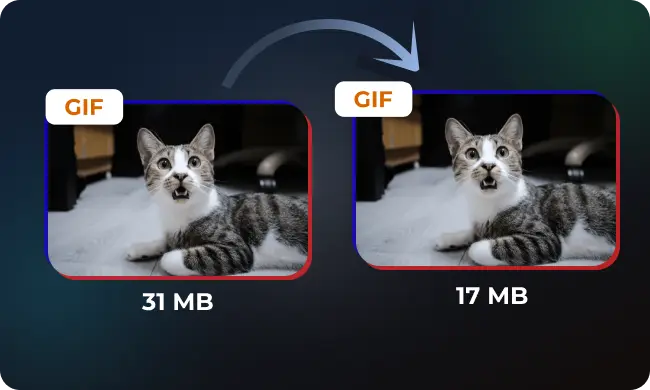
- • Optimize Before Distributing: Heavy animations can be optimized using our GIF Compressor for fast web loading.
Explore More Free GIF Tools
Discover the full suite of free browser utilities for your animated content: